Hiring Plumbers in Charlotte: Costs, Checks and Scope
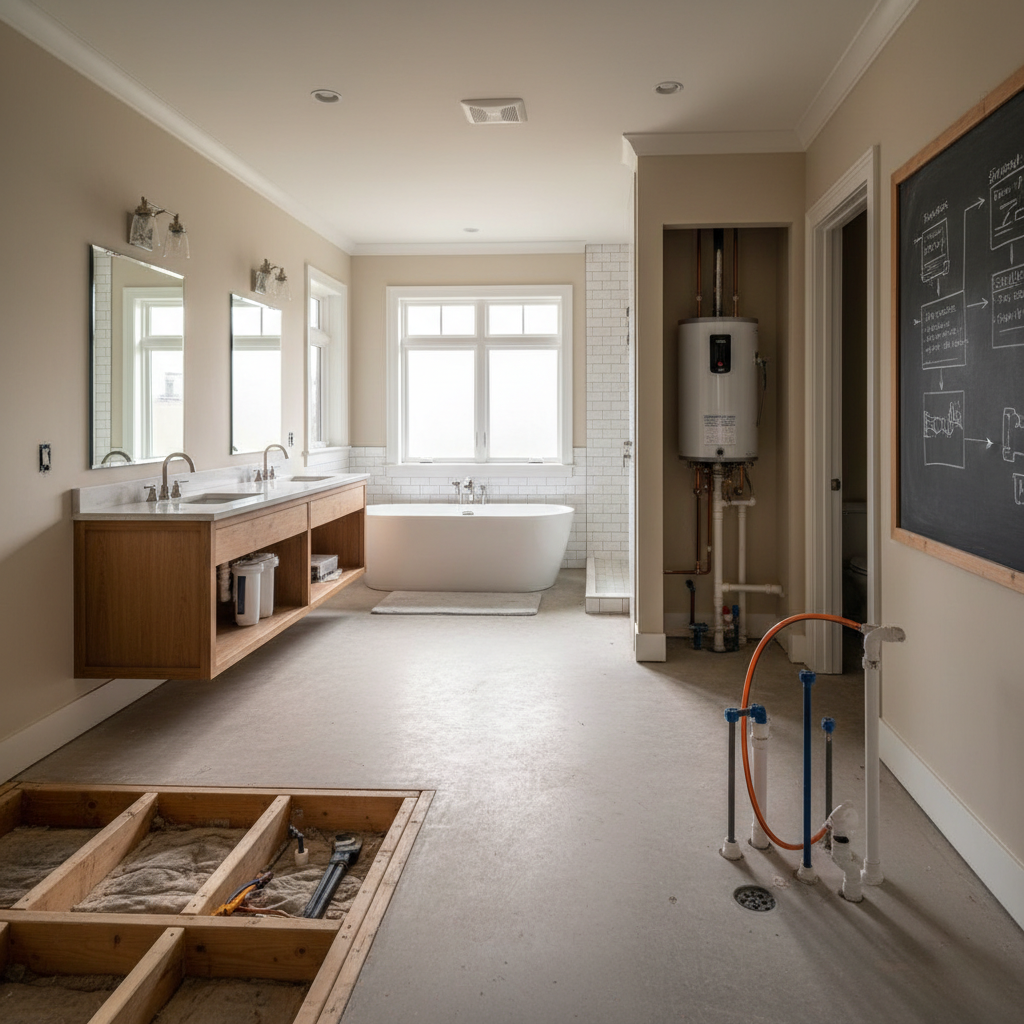
Hiring a plumber starts with defining the problem—not choosing the lowest estimate. Charlotte’s older bungalows, suburban subdivisions, and newer infill homes present different access, piping, and utility conditions. This October 12, 2026 guide offers planning ranges and contract questions. Charlotte Home Pros Journal is published by Nicholas Peters and affiliated with the Peters businesses; it is not an independent review site, and directory listings are not endorsements.
1. Start with a scope and a realistic budget
When comparing plumbers Charlotte NC homeowners find online, send each company the same description, photographs, fixture count, and access information. Identify whether you need diagnosis, replacement, or a remodel installation. Search results for “best plumbers in Charlotte” cannot establish who is qualified for your particular work.
These are broad 2026 Charlotte-area planning allowances, not verified quotes. They assume ordinary residential conditions and professional installation. Access, equipment selection, utility upgrades, permits, and restoration can substantially change the total; ask bidders to identify exclusions.
| Project | Planning range | Important scope boundary |
|---|---|---|
| Diagnostic service visit | $125–$300 | Repair, after-hours service, and specialized testing may cost extra. |
| Whole-house supply repipe, typical two- or three-bath home | $6,000–$16,000 | Difficult access or copper specifications can exceed $20,000; drains and wall repairs may be excluded. |
| Gas tankless replacement with compatible infrastructure | $3,500–$6,500 | Conversion from a tank often runs $5,000–$10,000 or more with gas, venting, and electrical changes. |
| Whole-house filtration or softening | $1,500–$4,500 per system | Combined treatment or complex well-water correction can reach $4,000–$8,000 or more. |
| Under-sink reverse osmosis | $450–$1,200 | Cartridge replacement and specialized faucet work affect ownership costs. |
| Bathroom rough-in for toilet, sink, and shower or tub | $2,500–$6,000 | Slab relocation or difficult drain routing can reach $6,000–$12,000 or more; finish fixtures are separate. |
Carry a contingency for concealed conditions, particularly in older houses. A firm price after investigation is more useful than a low allowance that leaves demolition, excavation, and finish repairs undefined.
2. Check the license, insurance, and contract
Before you hire plumbers Charlotte projects require, confirm the contracting business’s active license through the North Carolina State Board of Examiners of Plumbing, Heating and Fire Sprinkler Contractors. Check that the classification covers the proposed work and that the licensed entity matches the contract. A business registration or another trade’s license is not a substitute.
Request current general liability and applicable workers’ compensation evidence, preferably supplied by the insurance agent. Confirm the named insured and coverage dates. If a company claims a workers’ compensation exemption, ask how its staffing qualifies and who covers subcontractors. A certificate alone does not explain every exclusion.
For Charlotte and most Mecklenburg County addresses, start permit questions with Mecklenburg County Code Enforcement; in Union County, confirm requirements with the county’s building-code office for the specific property. Do not assume a nearby municipality, mailing address, or existing bathroom settles jurisdiction. Have the contractor identify required plumbing, gas, and electrical permits and who obtains them.
- Who is the licensed contracting party, and who supervises the crew?
- What equipment models, pipe materials, fixtures, and quantities are included?
- Who pays for permits, inspections, demolition, disposal, and restoration?
- How are concealed-condition changes priced and approved in writing?
- What deposit and progress payments correspond to completed work?
- When will water be off, and what happens if an inspection delays completion?
- What labor warranty applies, and who handles manufacturer claims?
Use our Charlotte contractor hiring guide to organize comparisons, and review these contractor warning signs before paying a deposit. Avoid arrangements that shift permit responsibility to you merely to bypass contractor accountability.
3. Repiping: separate supply trouble from drain trouble
Older Dilworth and Plaza Midwood homes may contain several generations of plumbing. Some suburban homes from the late twentieth century have materials worth identifying before renovation, including polybutylene. Age or neighborhood alone does not establish pipe condition; request photographs and a material inventory.
A supply repipe replaces pressurized water lines. It does not automatically replace cast-iron drains, a failing sewer lateral, or the buried service from the meter. Low pressure could instead come from a regulator, restricted valve, or localized blockage. Ask what measurements support a whole-house replacement.
The proposal should specify PEX or copper, connection methods, pipe sizing, shutoffs, fixture connectors, and insulation. Confirm whether every old branch will be disconnected and whether the meter-to-house line is included. In Charlotte’s humid crawlspaces, require supported piping and appropriate insulation rather than lines resting on soil or debris.
Ask the plumber to mark anticipated wall and ceiling openings before signing. Define who restores drywall, tile, paint, and crawlspace ground covering. Require appropriate testing and inspection before concealment, then a fixture-by-fixture operating check before final payment.
4. Tankless heaters: size the installation, not just the box
A tankless heater’s advertised flow is not a promise that every shower can run simultaneously. Ask for sizing based on winter incoming-water temperature, desired outlet temperature, and simultaneous demand. A household using two showers and a washing machine needs a different assessment from a one-bath bungalow.
For a gas conversion, require a gas-load calculation and evaluation of the meter, regulator, and piping. Existing tank-heater venting may not work with the new unit. Condensing equipment needs manufacturer-compliant venting and condensate disposal; outdoor equipment needs an appropriate location and freeze protection.
Whole-house electric tankless equipment can require substantial electrical capacity. Have the electrical scope evaluated before buying the heater. An apparently cheaper appliance can become the more expensive project once service or panel work is included.
Ask whether isolation and flushing valves, electrical connections, recirculation controls, and startup are included. Tankless does not mean instant hot water at distant faucets. Get a maintenance schedule based on the manufacturer’s instructions and measured water conditions, plus a price for routine servicing.
5. Buy water treatment for a measured problem
Distinguish utility-supplied water from a private well. Parts of the Charlotte region, including Union County, have both. Ask what evidence connects the proposed treatment to your complaint: hardness, sediment, odor, staining, or a specific contaminant. Do not assume Charlotte water universally needs a softener.
Utility reports provide system-level context, but concerns about water at your own tap may require targeted sampling. For wells, use appropriate laboratory testing rather than relying solely on a salesperson’s demonstration. New discoloration or odor deserves investigation before equipment selection.
A sediment filter, activated-carbon system, softener, and reverse-osmosis unit perform different jobs. Ask for certification supporting the specific reduction claimed—not simply a general statement that a product is certified. Get written cartridge, salt, wastewater, and service requirements, along with bypass-valve and drain arrangements. Budget for maintenance over several years, not just installation.
6. Bathroom rough-ins: settle dimensions before opening floors
Rough-in pricing becomes meaningful only after the layout and fixtures are selected. Provide toilet specifications, shower-valve details, tub dimensions, vanity drawings, and finished-wall thicknesses. Wall-hung toilets, curbless showers, and freestanding tubs introduce requirements that a generic three-fixture allowance may miss.
In slab houses, moving a toilet can mean concrete cutting, excavation, drain alterations, and slab repair. Piedmont red clay makes buried work messy and can complicate wet-weather excavation and restoration. In framed floors, new drain routes must respect joists; structural changes need appropriate review rather than improvised notching.
Require the proposal to address drain slope, vent routing, cleanout access, testing, and inspection before walls close. Assign responsibility for shower waterproofing and any required testing separately; a sound drain connection does not make the entire shower waterproof. Browse the Charlotte plumbing professional directory for possible contacts, then perform your own license, insurance, and scope checks.
Frequently Asked Questions
Does a Charlotte repipe include sewer replacement?
Usually not. A supply repipe covers pressurized water piping. Ask whether the estimate includes the meter-to-house service, fixture connections, drain piping, or sewer lateral; each should be identified separately.
Do I need a permit for a tankless water heater?
Plan on confirming permit requirements before installation. A conversion can involve plumbing, gas, and electrical work. Have the contractor identify the permits and inspections required by the authority serving your address.
How many plumbing estimates should I get?
For planned major work, three comparable written estimates are a useful target. Give each bidder the same scope and compare exclusions, materials, restoration, warranties, and payment terms—not just the total.
A workable plumbing contract connects a diagnosed problem to a defined installation, documented checks, and a clear completion standard. Settle those details before signing, while changes are still inexpensive.